
How Hot Is Too Hot? – The Scoville Scale Explained Simply
What exactly does "spicy" mean – and when does it get dangerous? In this article, you'll learn what the Scoville scale measures, how jalapeños, habaneros & co. are classified – and how to find your personal spice level.
Scoville scale explained
🌶️ The ultimate question: How much "fire" is in your sauce?
You've probably seen it before: "8,000 Scoville," "350,000 SHU," "1.2 million units." Sounds impressive – but what do these numbers actually mean?
The Scoville scale is an attempt to quantify the subjective sensation of spiciness. It was developed in 1912 by American pharmacologist Wilbur Scoville. He wanted to know how much capsaicin – the chemical substance that makes chilies hot – was contained in a particular variety. The more dilutions needed until test subjects no longer tasted any heat, the higher the Scoville value.
Today, this is measured by high-tech analysis in the lab. But the principle remains the same: more Scoville = more fire in your mouth.
🌶️ The most important chilies in comparison
- Jalapeño 2,500 - 8,000 SHU
- Serrano 10,000 - 25,000 SHU
- Cayenne 30,000 - 50,000 SHU
- Habanero 100,000 - 350,000 SHU
- Scotch Bonnet 100,000 - 350,000 SHU
- African Bird’s Eye 175,000 - 200,000 SHU
- Bhut Jolokia (Ghost) 800,000 – 1,000,000 SHU
- Naga Viper 900,000 - 1,400,000 SHU
- Moruga Scorpion 1,200,000 - 2,000,000 SHU
- Carolina Reaper 1,400,000 - 2,200,000 SHU
And SOCHILI?
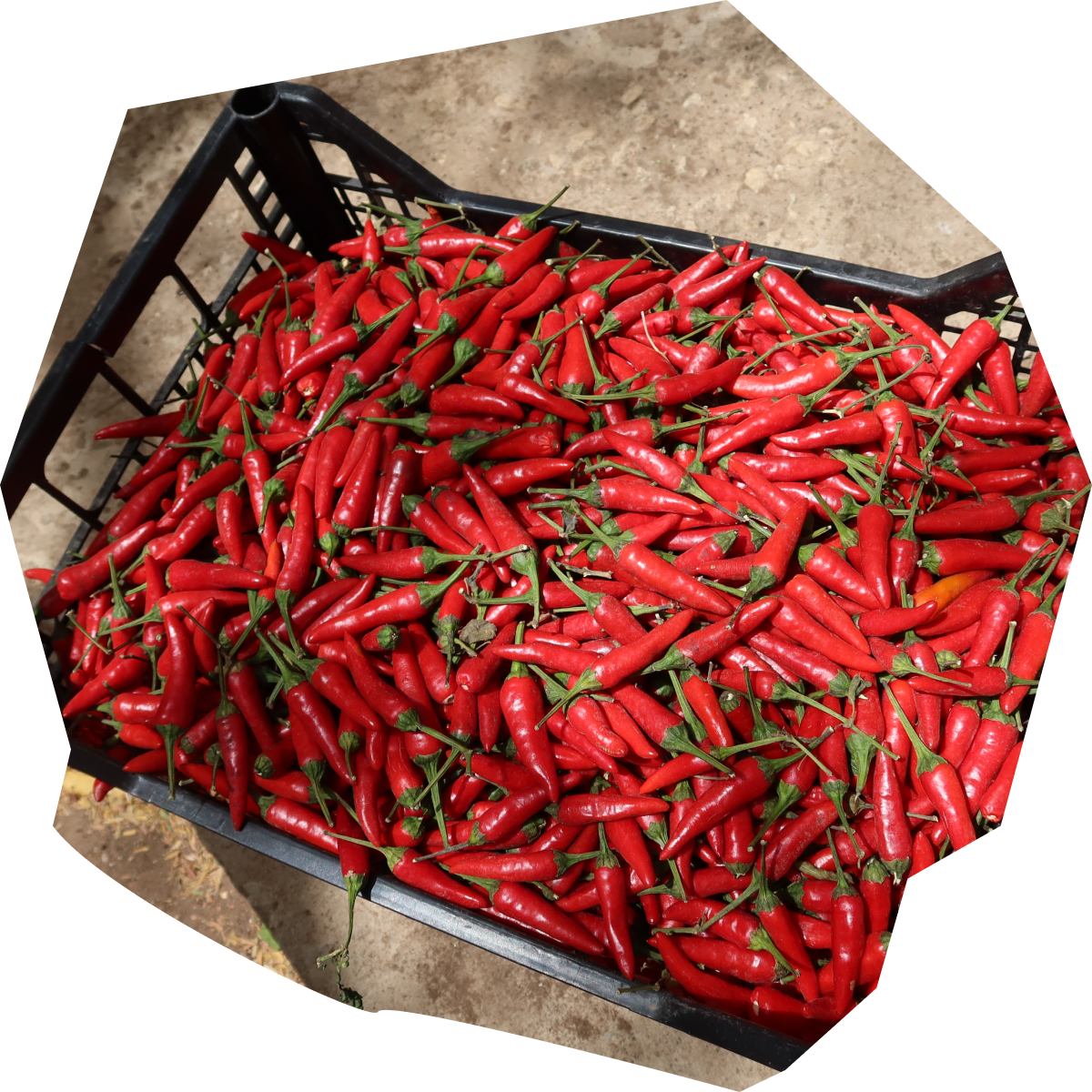
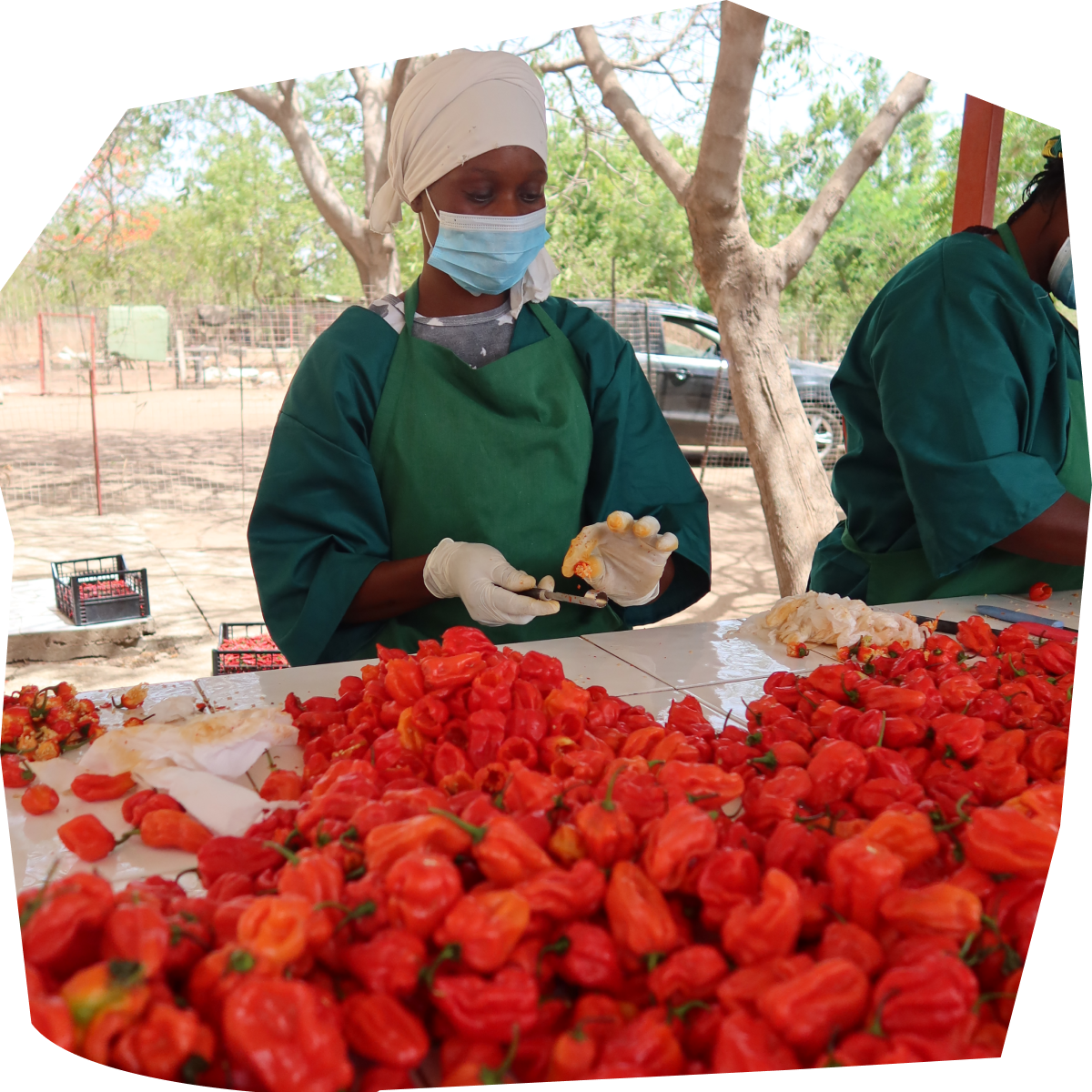
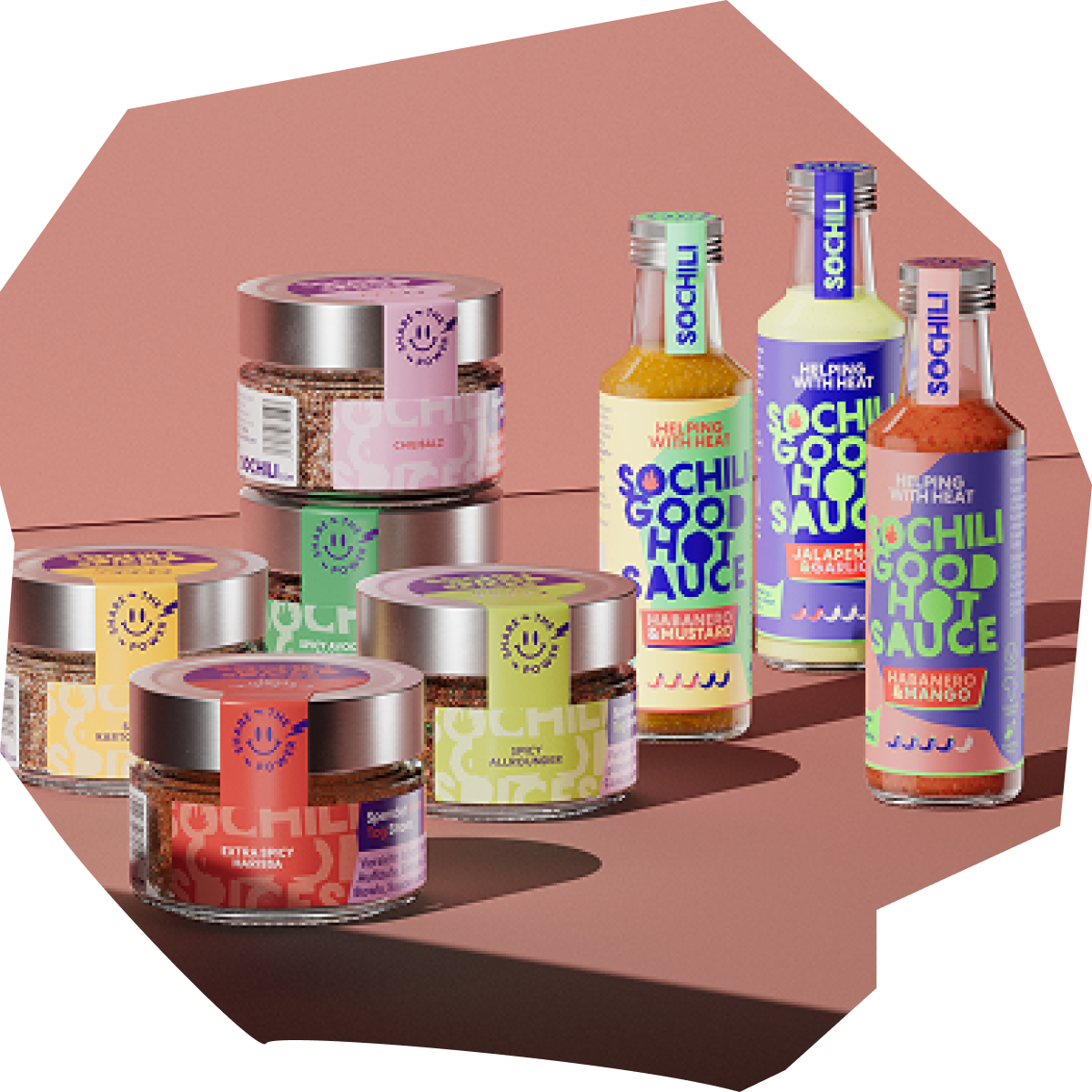
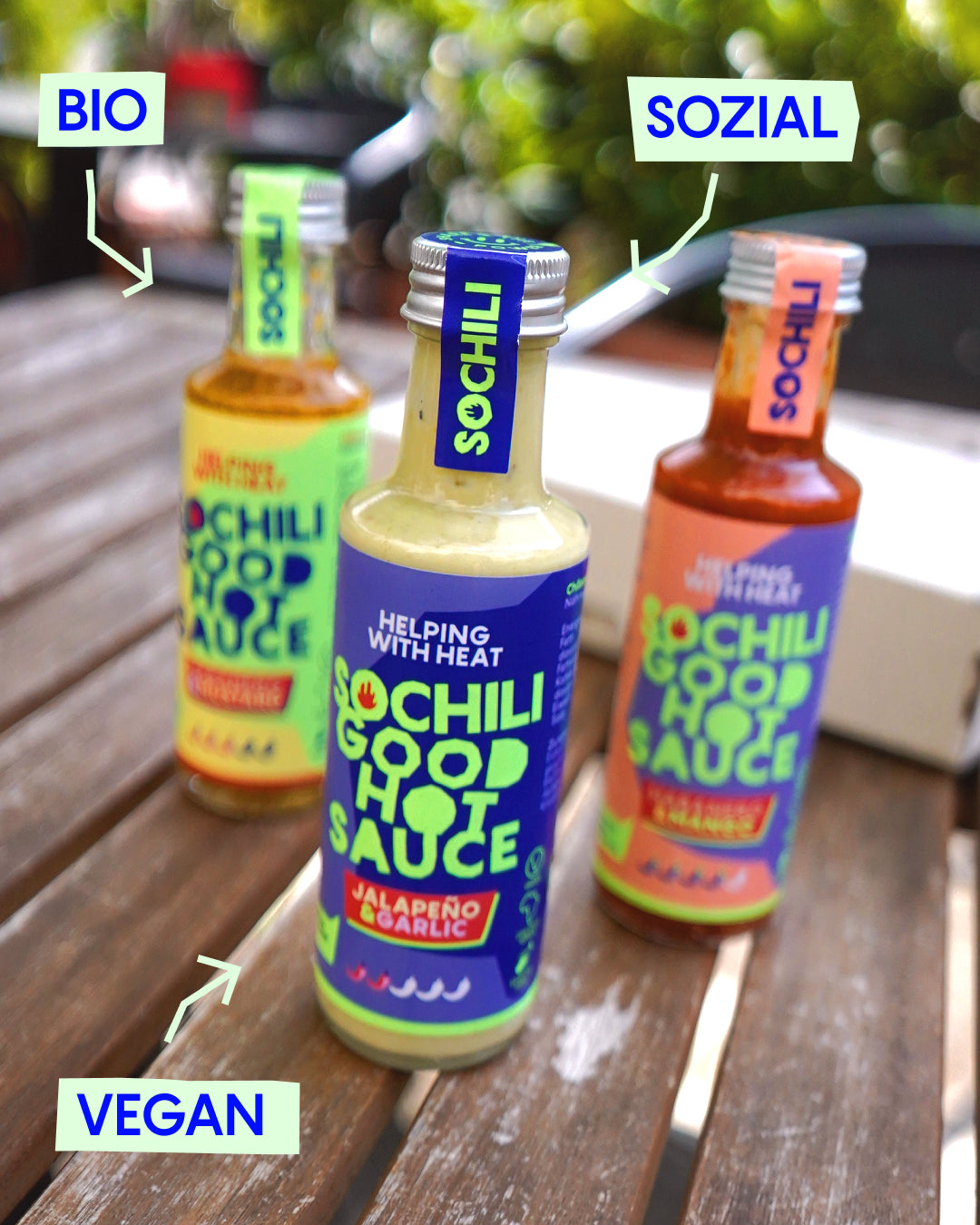
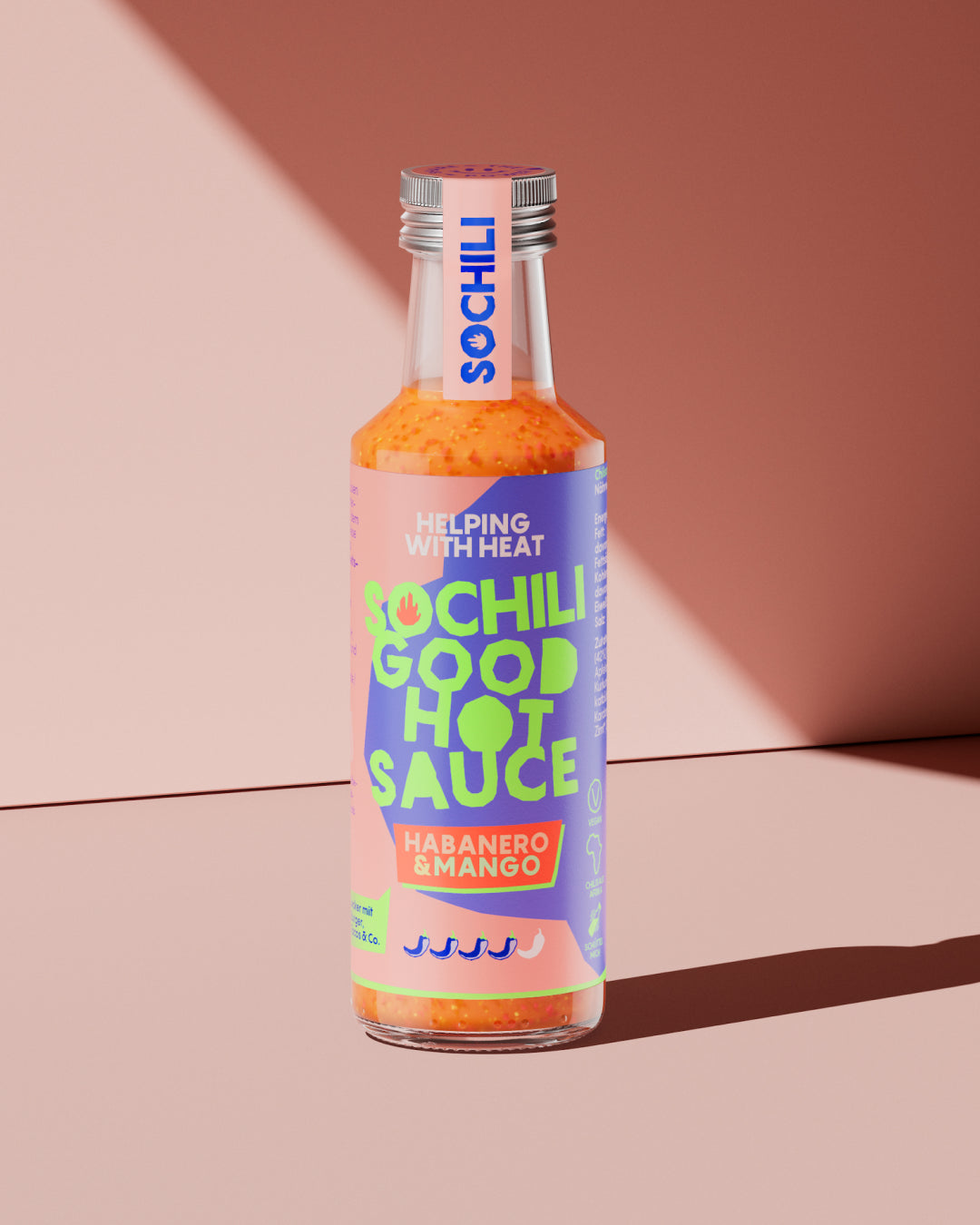
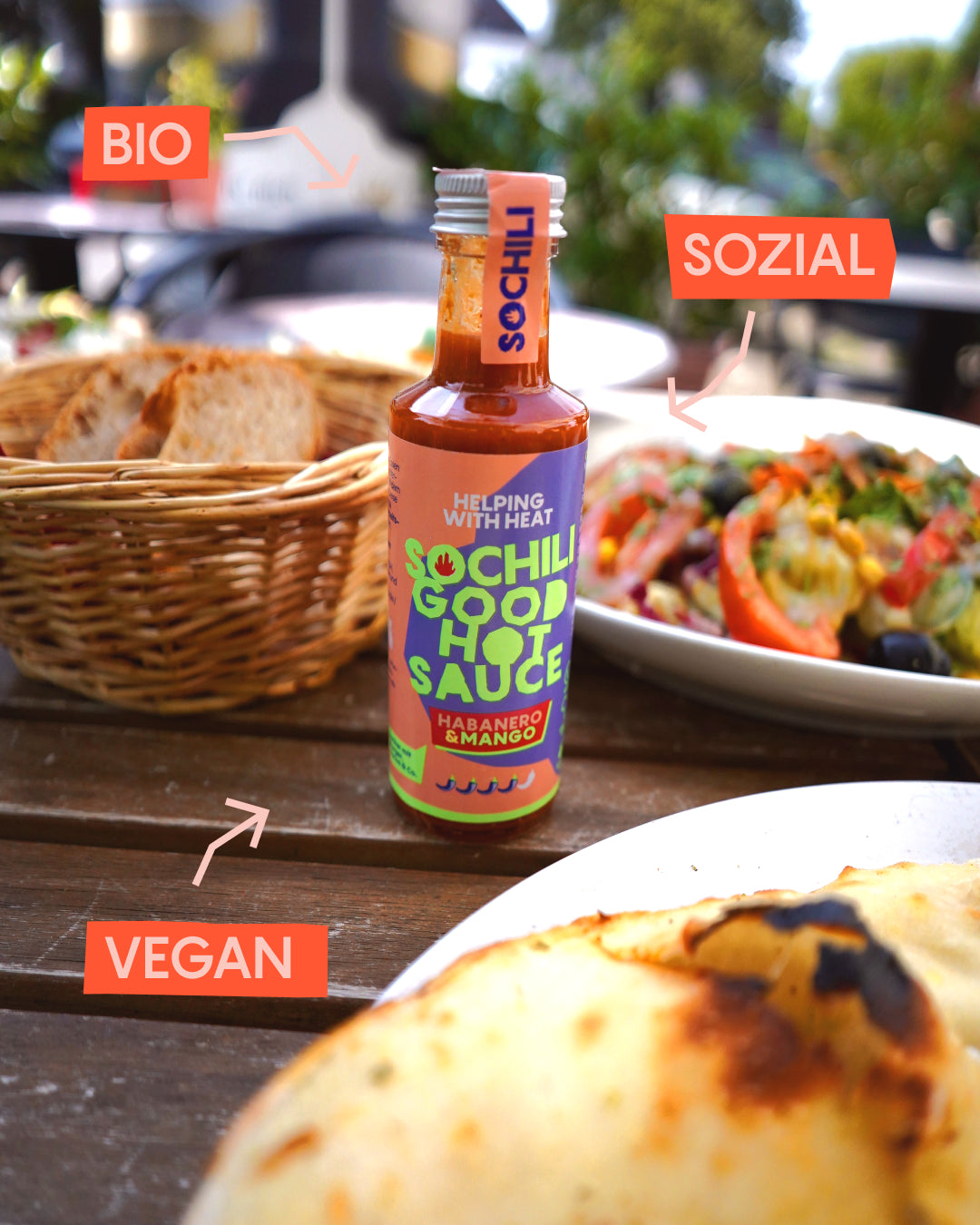
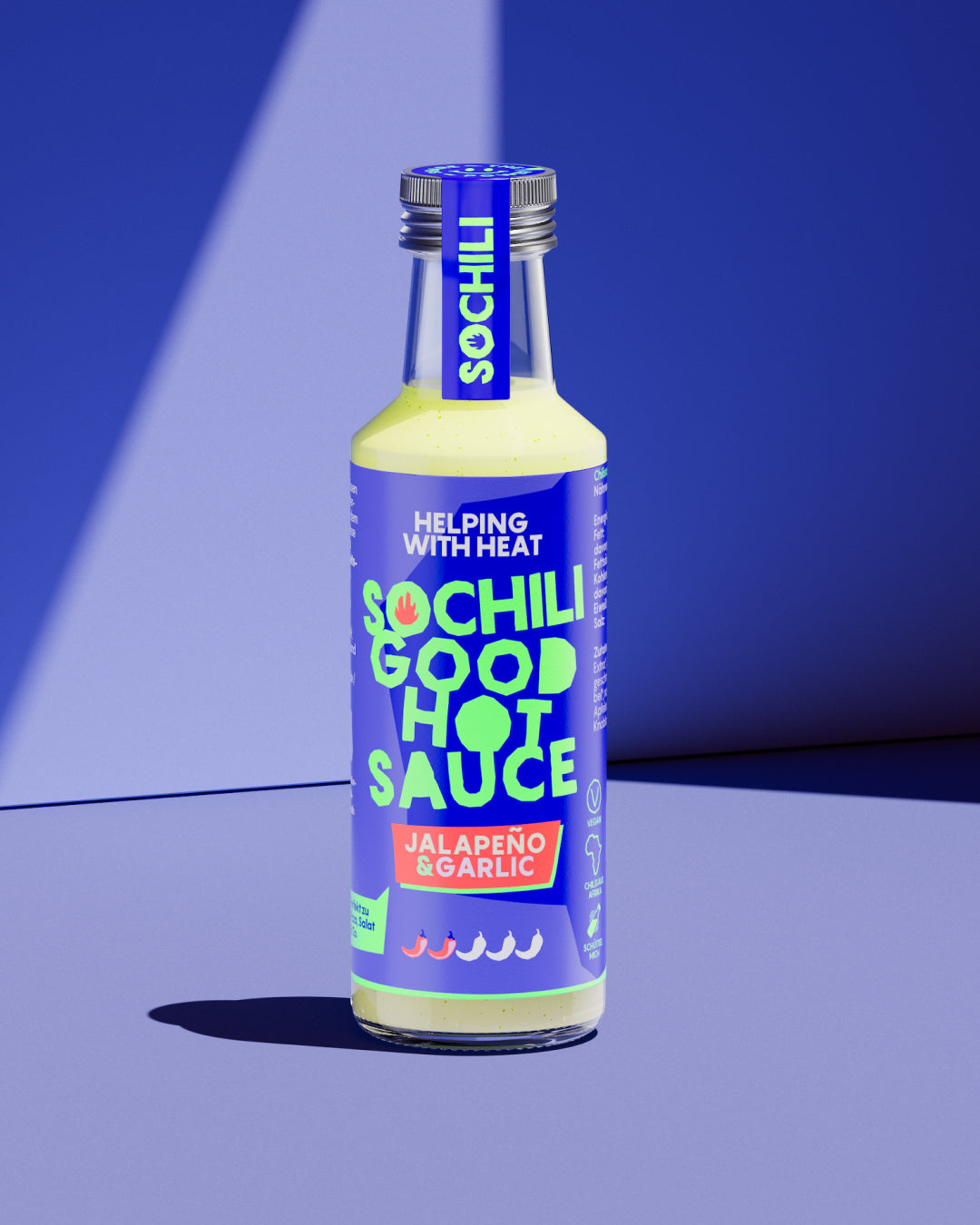
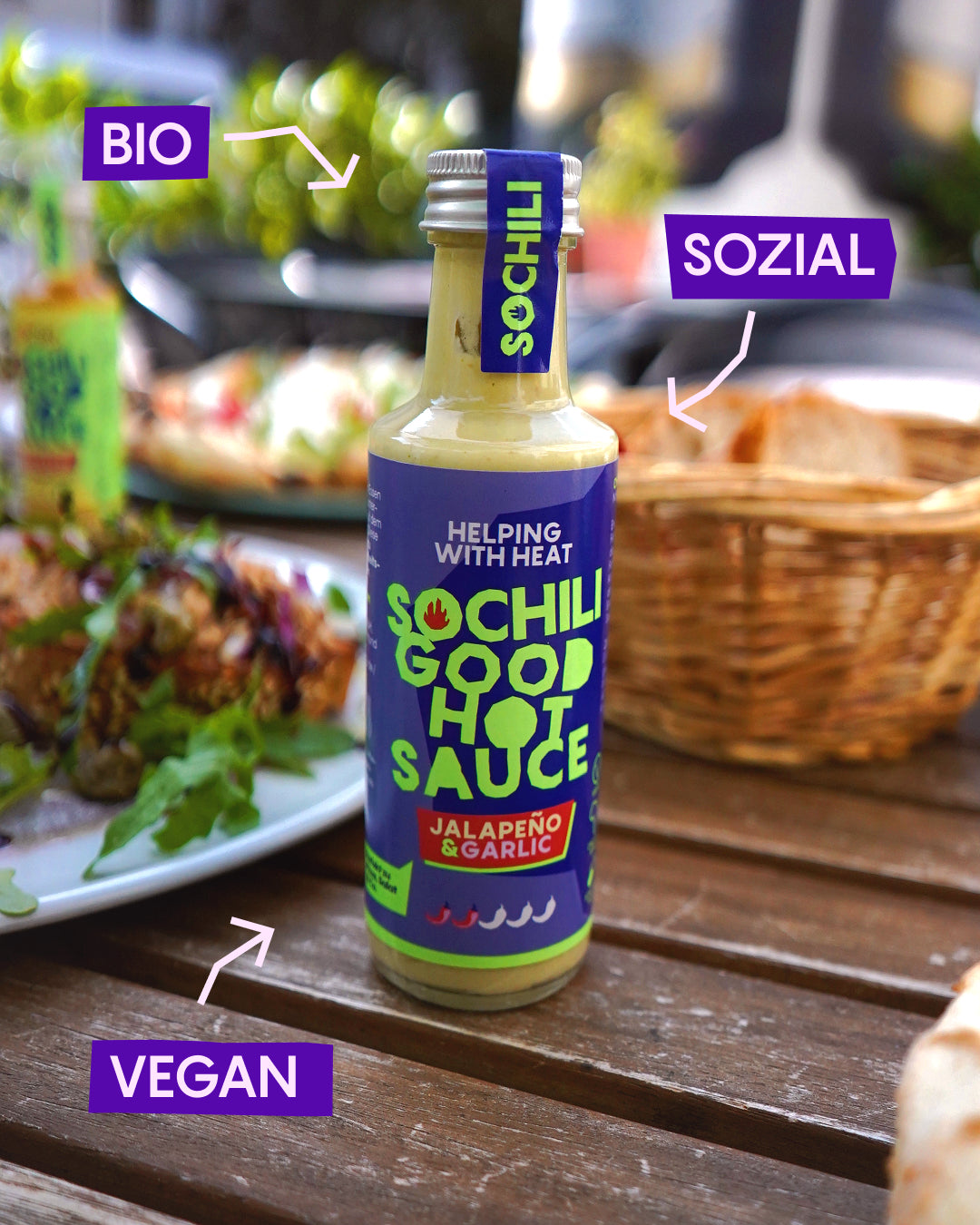
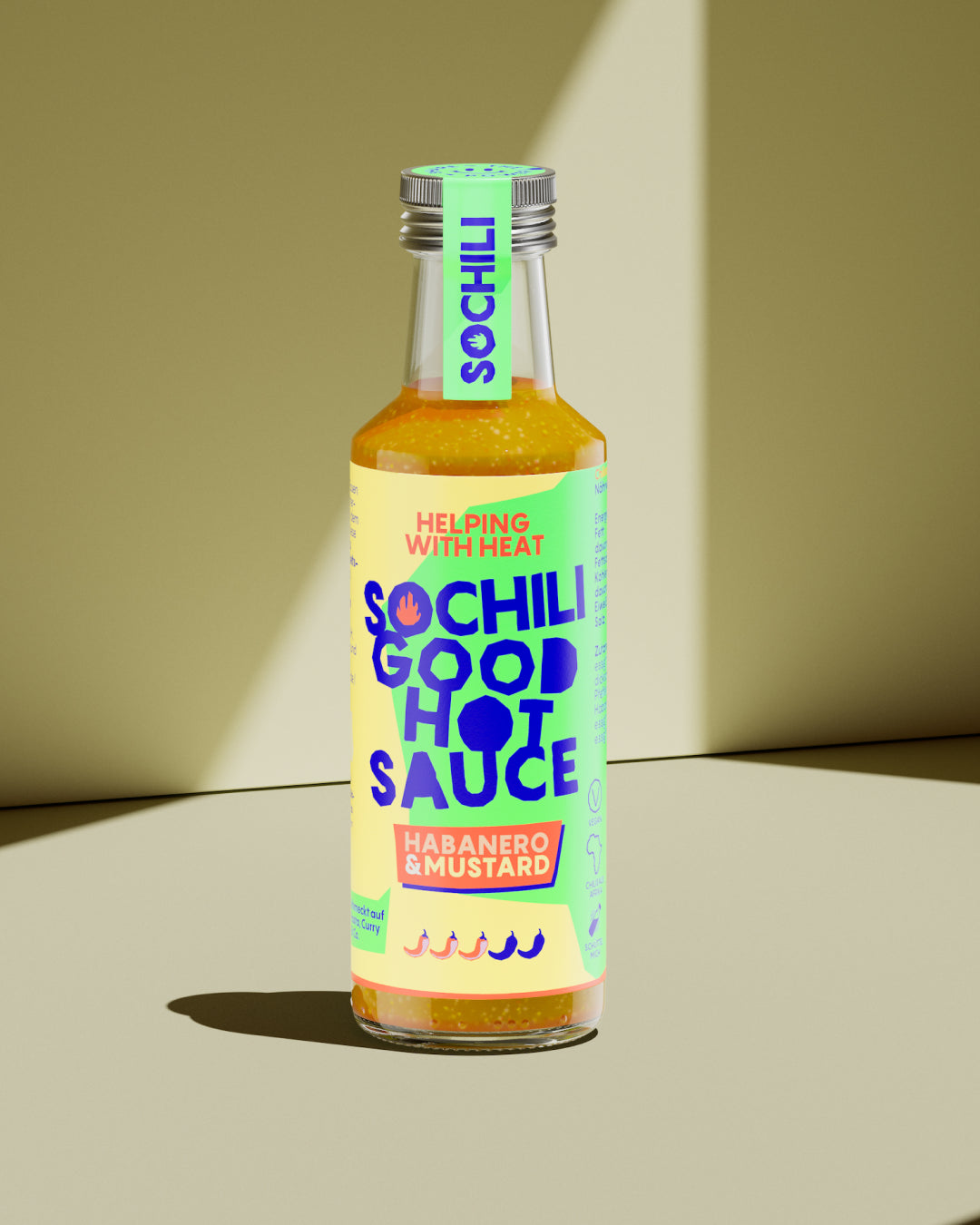
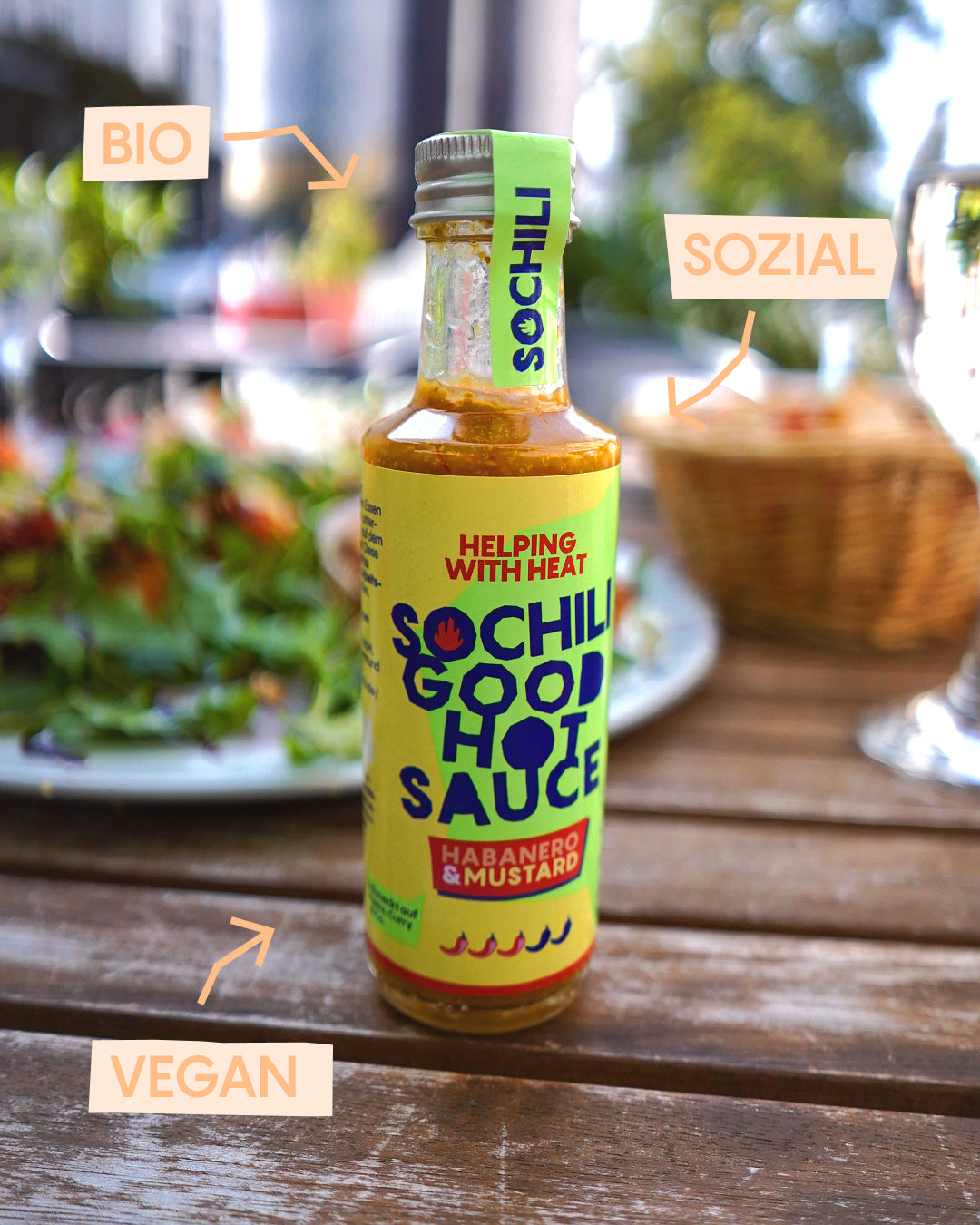
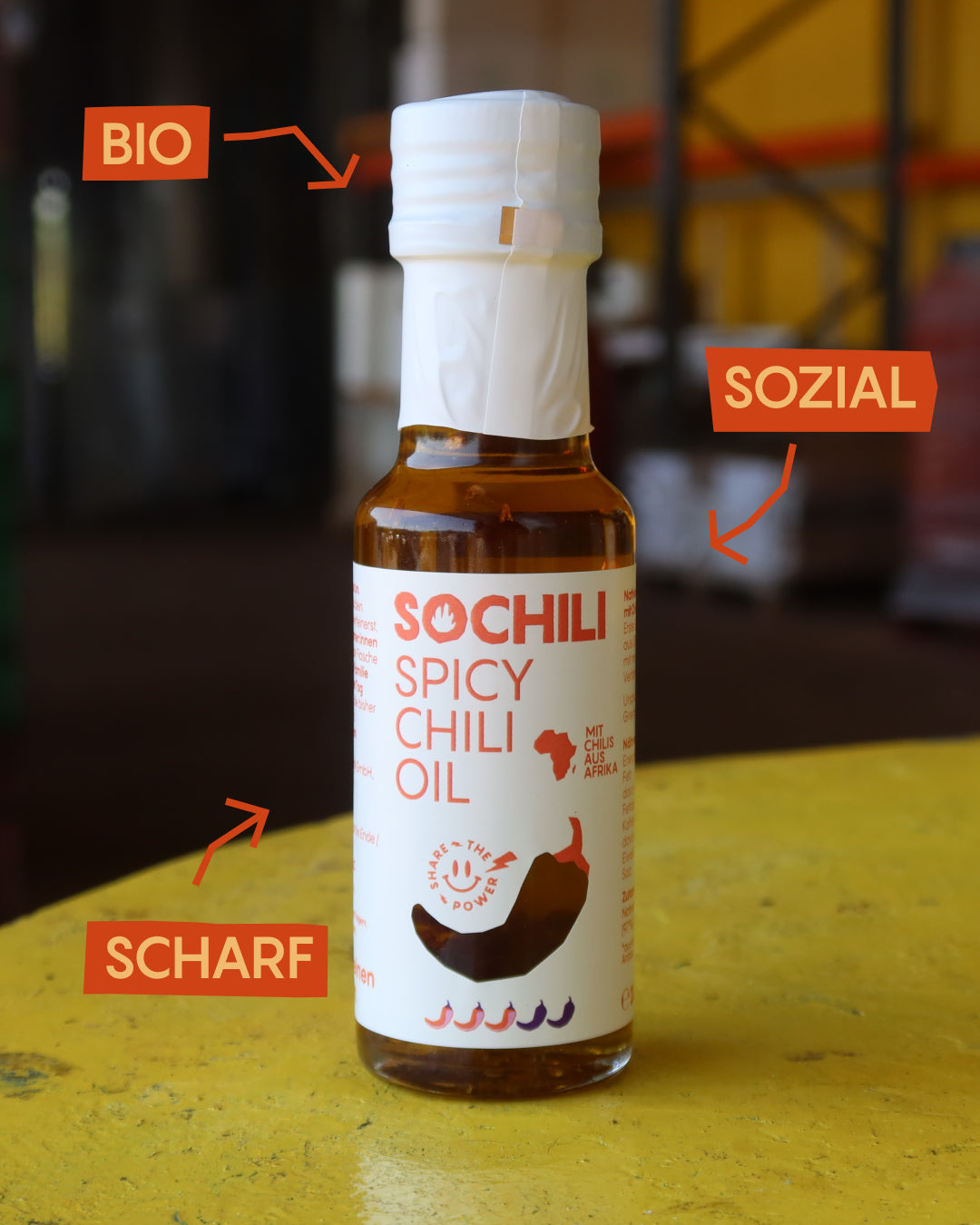
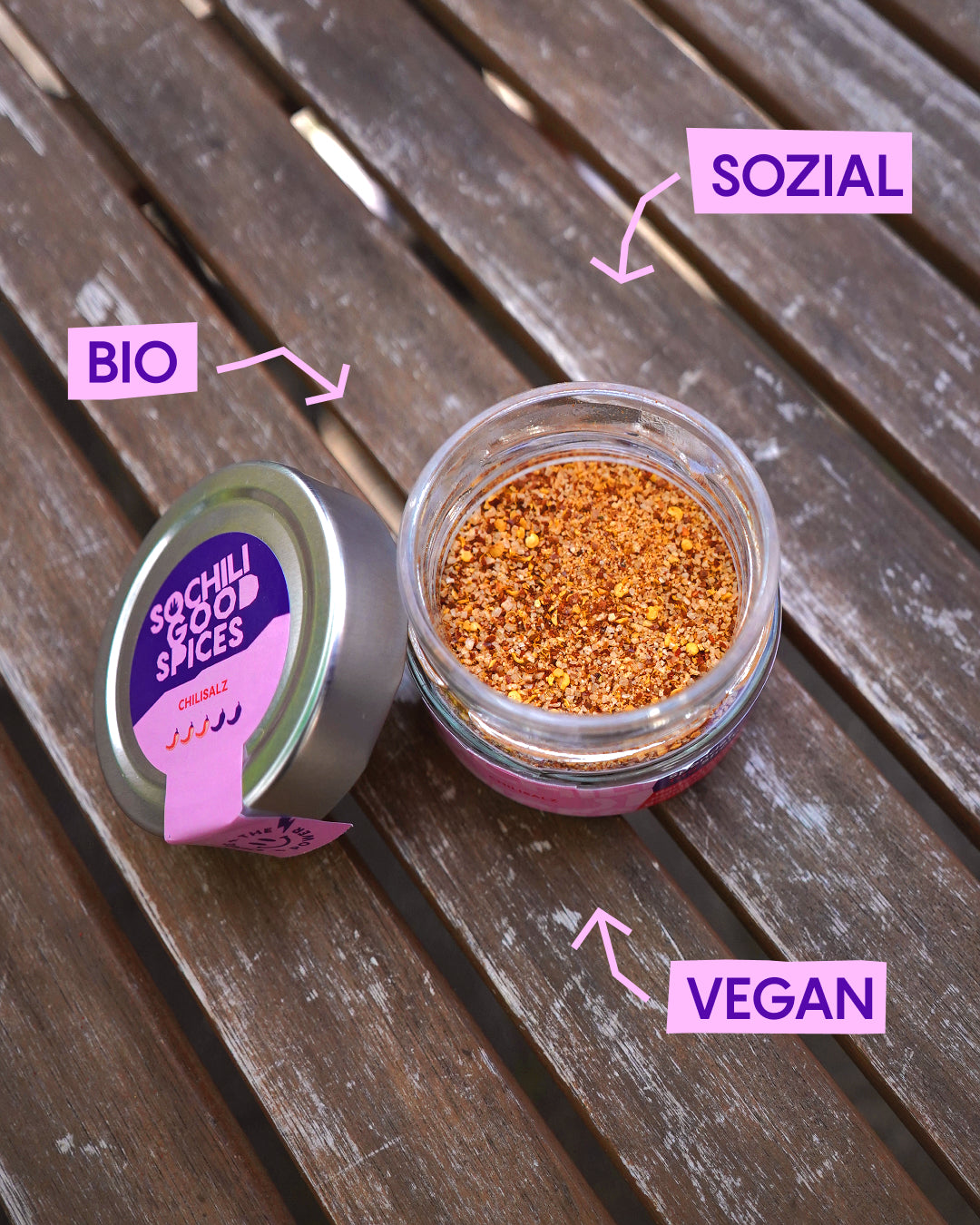
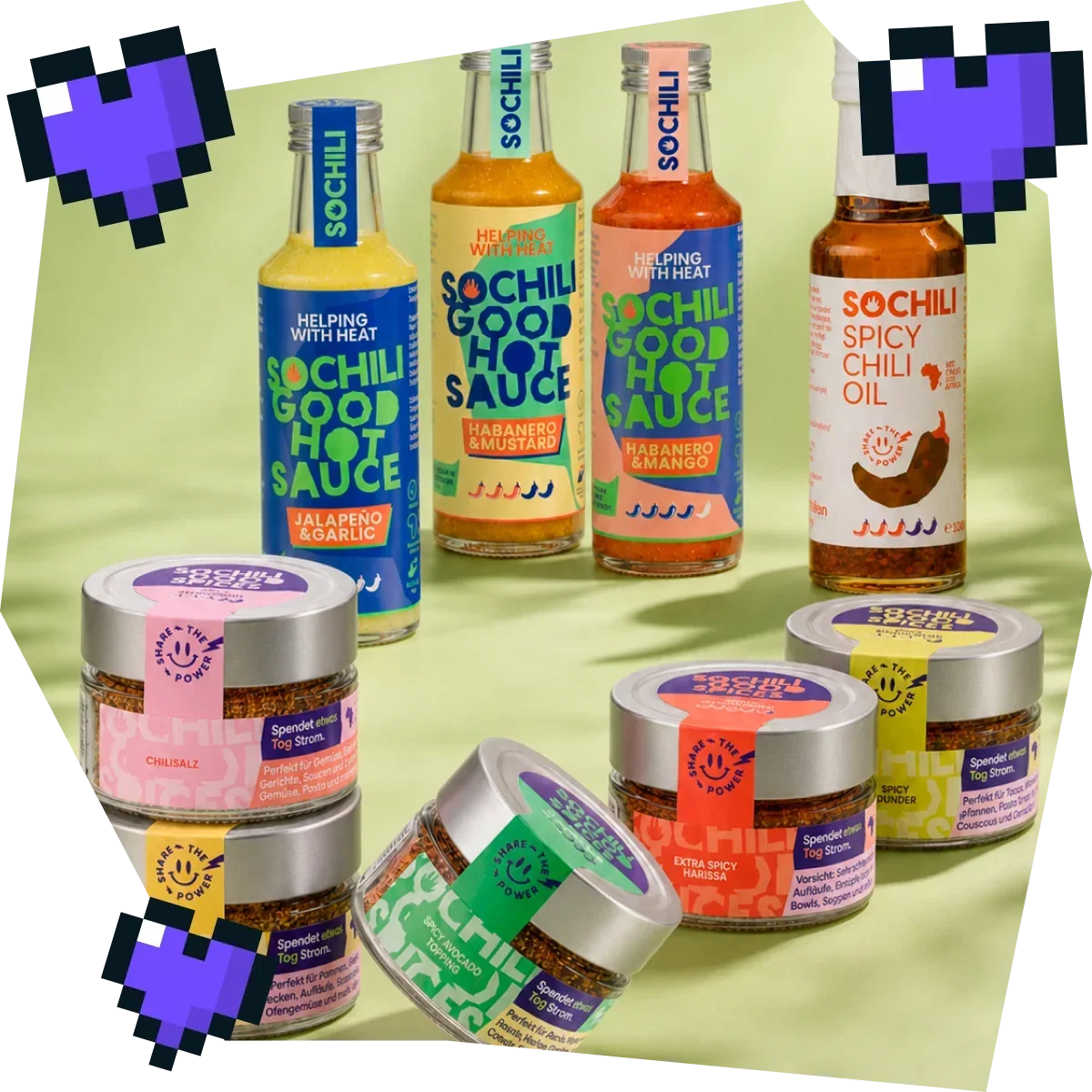
For our spices, we use Bird's Eye chilies, and for our sauces, we primarily work with Jalapeño and Habanero chilies – because they bring an intense, tropical sweetness in addition to their heat.
🔬 Capsaicin: The substance behind the burn
Capsaicin is the molecule that tricks your brain into thinking there's a fire. It activates the same receptor as actual heat – causing you to sweat, pant, cry... and at the same time release endorphins.
Yes, spiciness can get you high. No wonder many become addicted to it.
But: Capsaicin is not water-soluble. If it gets too spicy, water won't help – but fat will (e.g., milk, yogurt, or cheese). Or you can do what we do: Go for pleasure instead of pain.
Our recommendation:
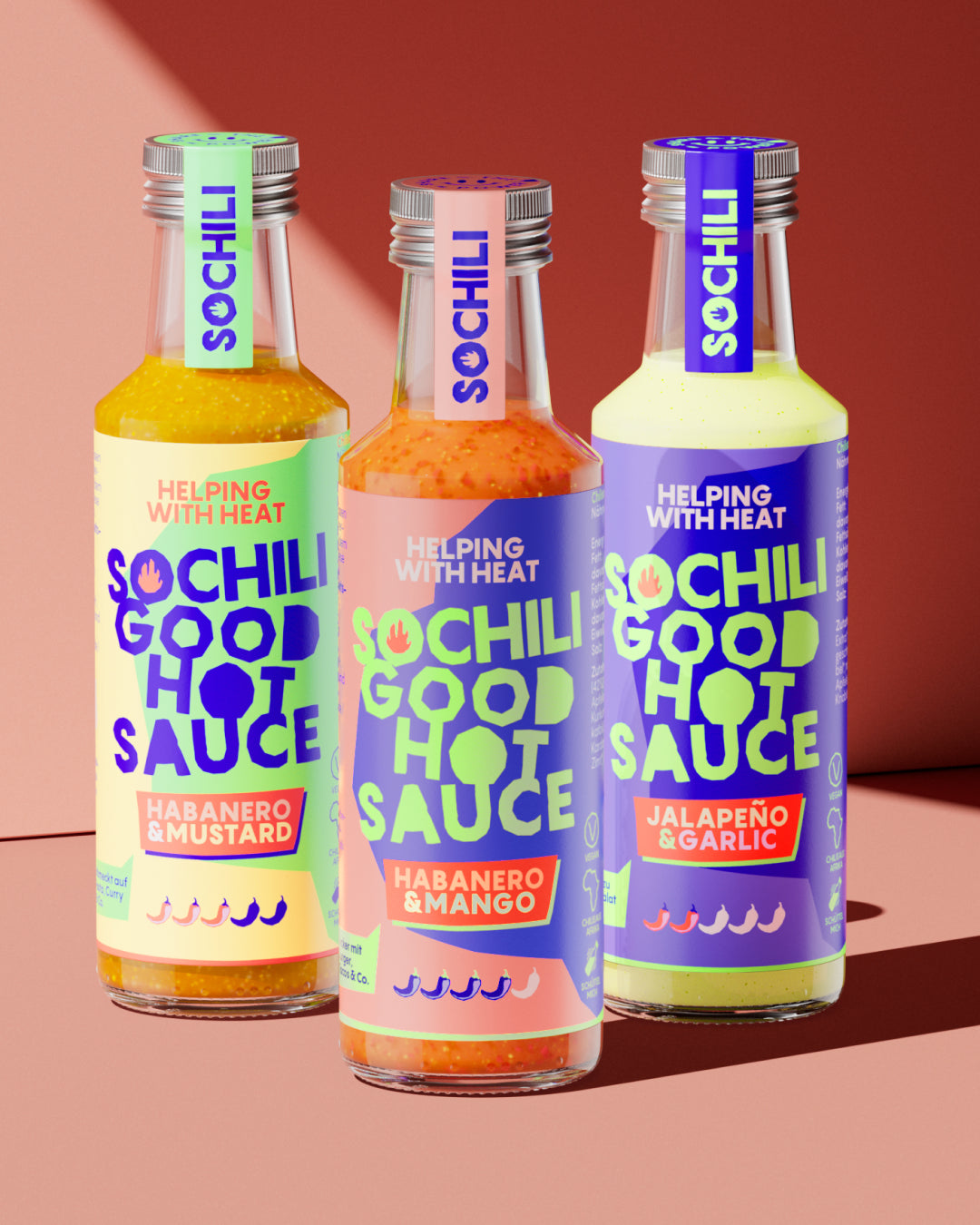
- Beginners? → Start with our Jalapeño & Garlic Sauce
- Experienced chili fans? → Try the Habanero & Mango Sauce
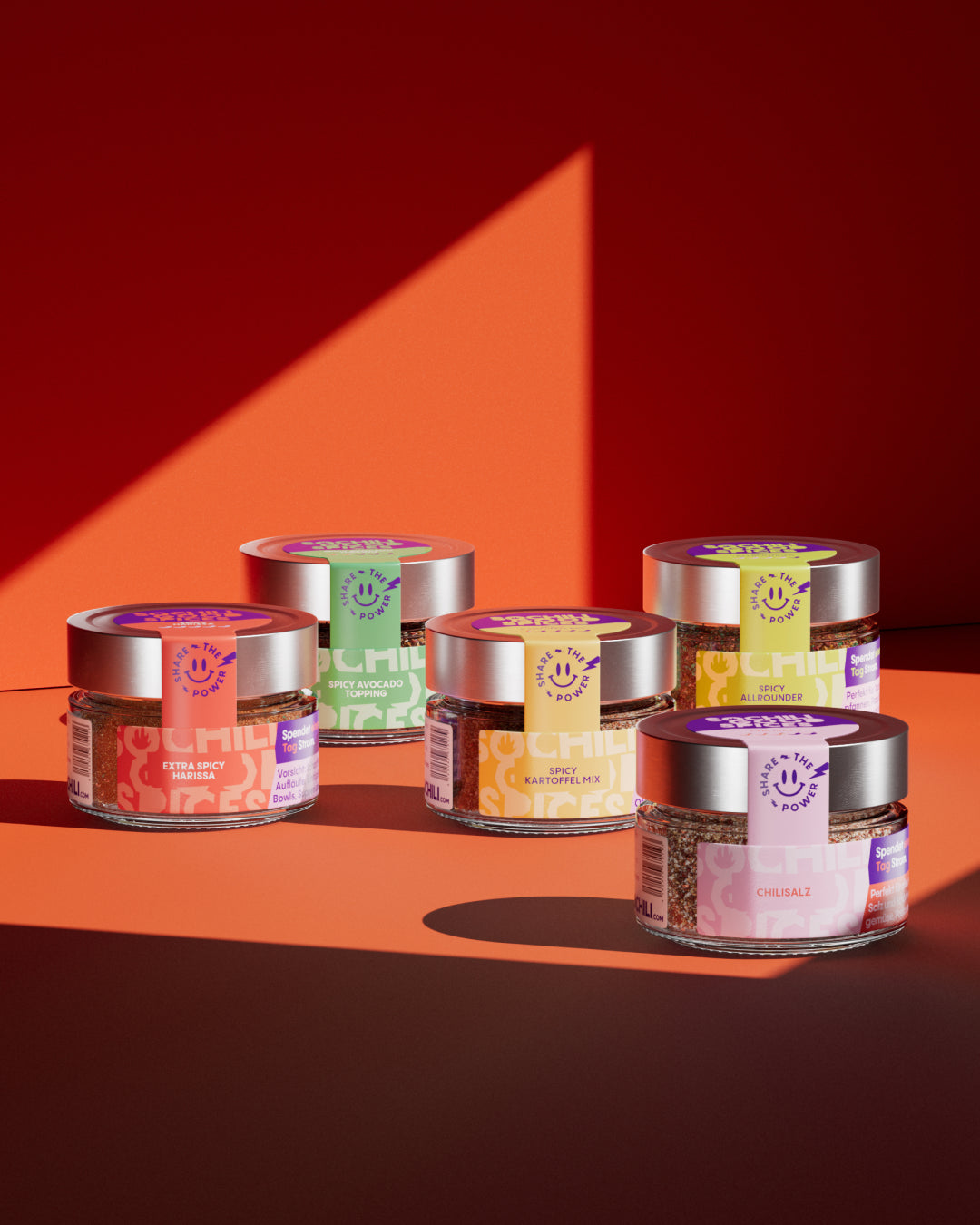
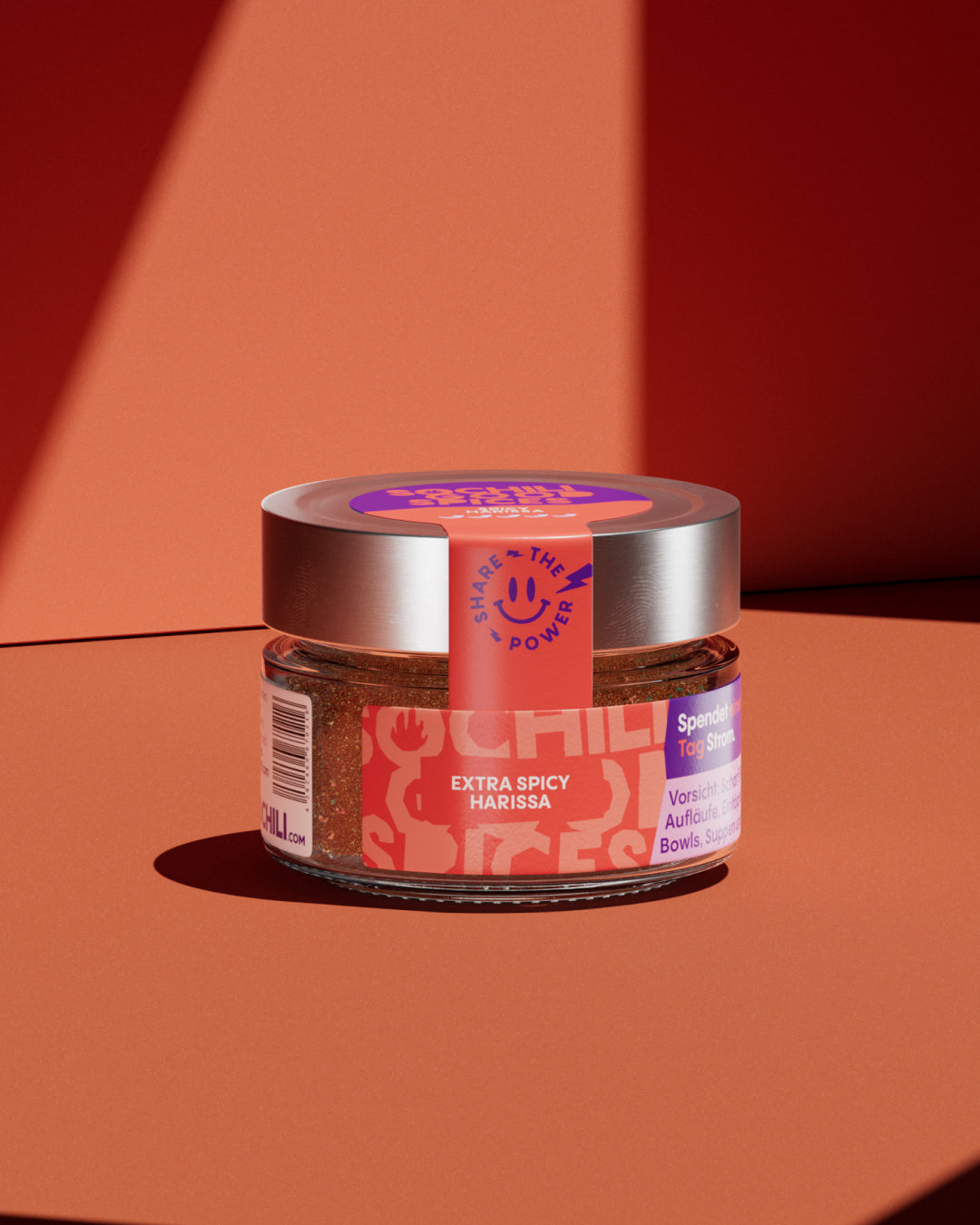
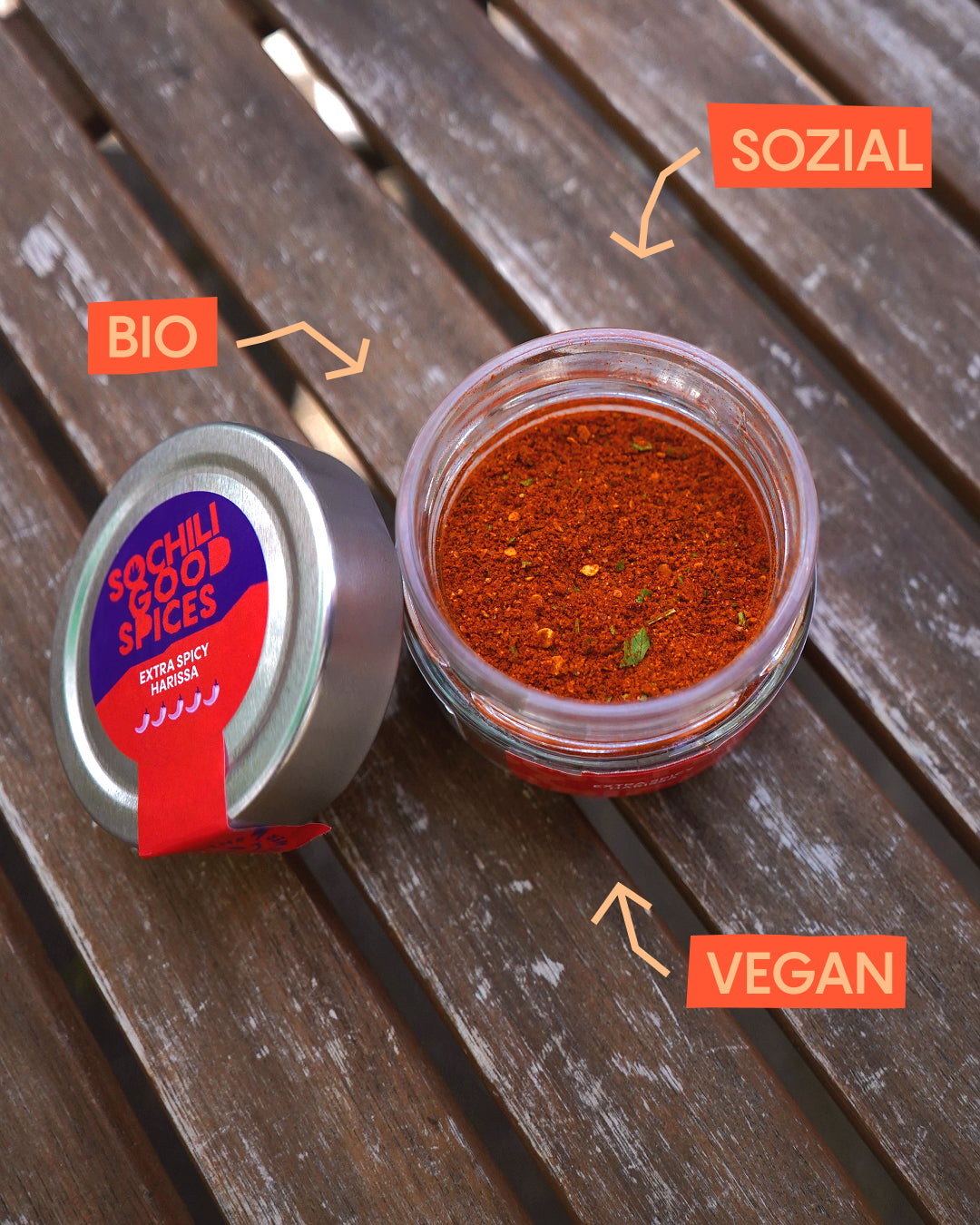
- Pro level? → One spoon of EXTRA SPICY HARISSA is enough.
The perfect balance
Why we don't make "pain sauces"? At SOCHILI, we don't believe in challenges, but in enjoyment. Our organic ingredients are carefully combined – always with the aim of balancing taste, acidity, sweetness, and heat.
Conclusion: Scoville is more than just a number!
Whether 5,000 or 500,000 Scoville, in the end it's not about showing off, but about the right level of spice.
The Scoville scale helps you find your level. And we at SOCHILI ensure that you not only sweat but, above all, enjoy the experience.
Season & Do Good

More blog posts
Guddi Punkte sammeln & sparen

🔓 New Impact Level Unlocked
